Star Citizen Intelligence Report: April 2026
The Industrial Awakening & The Nyx Expansion
🛰️ Your roadmap to an expanding universe
Unmatched ambition, tangible progress.
The transition to Alpha 4.7.0 LIVE has officially begun, marking the most significant technical leap since the introduction of Server Meshing. With Squadron 42 in the final "Gold Standard" polish phase, the Persistent Universe is receiving a massive influx of features previously reserved for the solo campaign.
Demystifying the 'Verse: Clarity in complexity.
We are moving beyond testing. The focus has shifted to Economy 1.0 and Physicalized Cargo, ensuring that every action you take has a ripple effect across the Stanton and Nyx systems.
Feature Highlights: Alpha 4.7.0 LIVE
-
Crafting Tier 0: The game-changer. Players can now utilize collected resources and scrap to manufacture basic components and ammunition using the new Greycat Industrial Multitool attachments.
-
Nyx System Expansion: Explore the QV Breaker Stations and the eerie People’s Service Stations. High-risk, high-reward gameplay in the most lawless system yet.
-
LOD & Physics Refinement: Significant FPS gains in dense areas like Lorville and Area18 thanks to the new Vulkan 2.0 implementation.
-
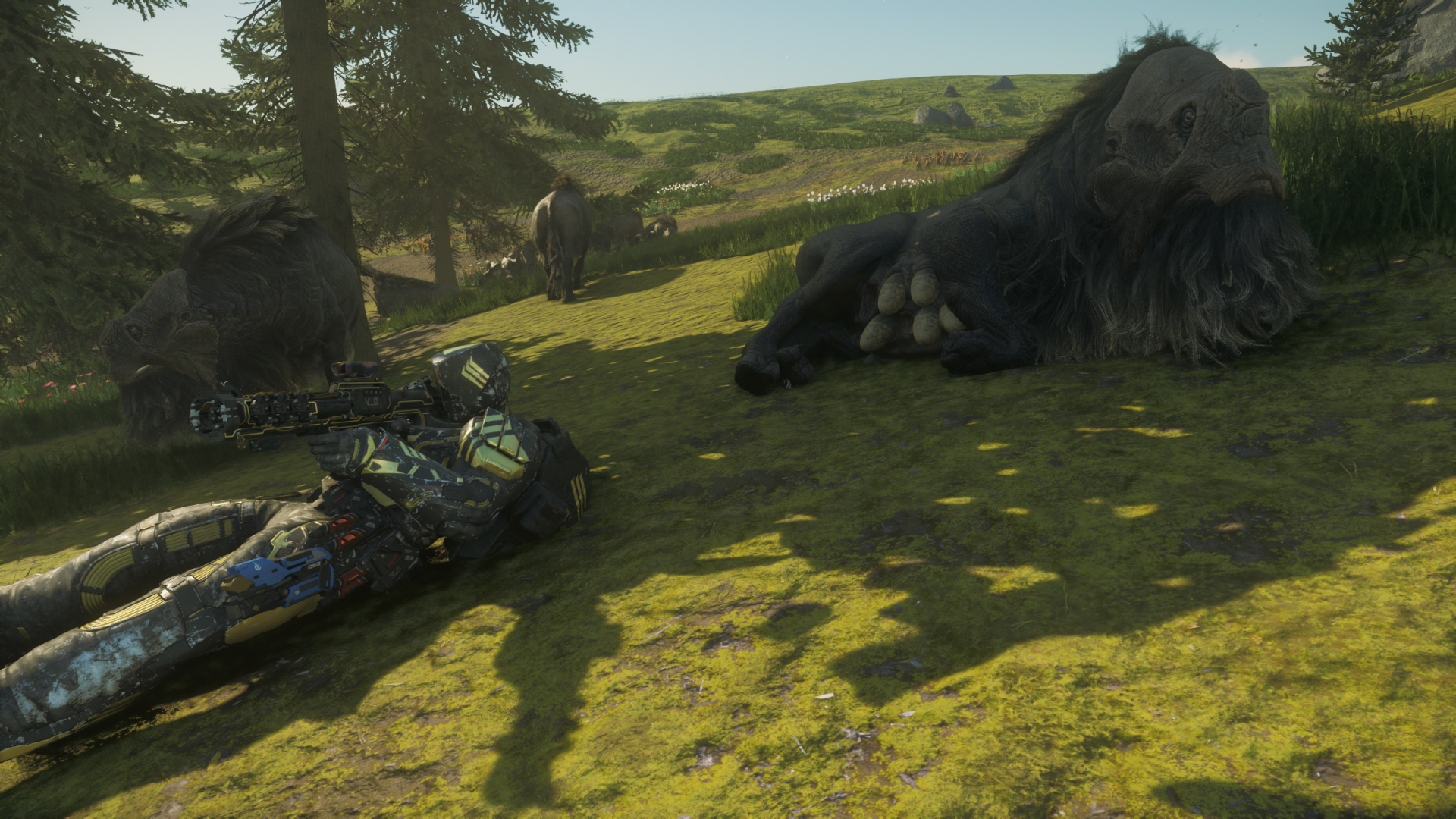
Wildlife Integration: Beware the Ice Valakkar. These apex predators now inhabit the frozen wastes of Nyx, featuring advanced AI pack-hunting tactics.
❓ Common Questions: April 2026 Edition
Q: Is Star Citizen still in Alpha?
A: Technically yes, but we are in the "Feature Complete" transition phase. Alpha 4.7 represents the foundation of what will eventually be rebranded as the Star Citizen 1.0 launch candidate.Q: Do I need to spend thousands of dollars on ships?
A: Absolutely not. With Crafting T0 and the expanded In-game Rental System, every ship is earnable through gameplay. The "Starter to Sub-Capital" journey is now more rewarding than ever.Q: What is the status of Squadron 42?
A: It is in the Final Polish Phase. All chapters are playable from start to finish. The team is currently optimizing performance for a wide range of hardware before the official release date announcement.
💎 The Monthly Spotlight: Crafting & Industry
Solo vs Organization Crafting
-
Solo Players: Focus on "Maintenance Crafting"—repairing your own gear and creating consumables.
-
Organizations: Can now claim Industrial Nodes to mass-produce vehicle components, creating a player-driven market that rivals NPC corporations.
Quality Tiers:
Not all scrap is equal. Materials are now rated from F (Scrap) to S (Pristine), directly affecting the durability and overclocking potential of your crafted items.
AI Content,
Last month saw AI make numerous fixes while continuing to build for the future. With Alpha 4.7 releasing at the end of March, the team fixed a series of bugs, including an elusive issue where station NPCs were offset from their benches.At the same time, support was provided for upcoming mission content, with the team incorporating placeholder script recordings and setting up comm calls. This will allow the directors and designers to have a better understanding of the intended experience while also allowing the writers to hear and adjust the script as needed.
AI then continued to look at building behaviors for new initiatives that they're excited to announce soon.
AI (Features & Tech),
For Alpha 4.7, AI Features & Tech solved issues caused by inclusions after breaching and looked into various bugs. In particular, civilians getting stuck in the cower position. They also restored the intended de-escalation when combat NPCs exit combat.Various crash fixes were implemented, while updates were made to navigation-link generation to connect them closer to individual navigational mesh edges. The team updated the behavior used by NPCs moving through doors with manual controls alongside general improvements to the functionality of NPCs requesting a path-to-end location to check whether a location is traversable.
On the development side, additional work was done on the apex valakkar. Now, the creature will be limited to moving within its arena, will emerge after X number of seconds, and will request a despawn if not damaged sufficiently within a set number of seconds.
The kopion now uses 'motive patterns' that have been upgraded with a pack-like growling and circling behavior when attacking. The juvenile valakkar can also use this motive pattern.
For Star Paws, improvements were made to the motive behavior parameter usability. Elsewhere, numerous general PU crashes were fixed.
Animation,
March saw the Animation team working on snake and worm-type enemies, including creating new behavior animations.The Facial Animation team began processing the content from February's performance capture shoot. This includes content for Alpha 4.8's new mission (where players will meet two new characters) as well as a news broadcast for Levski.
Art (Characters),
The Character Art team progressed with projects for Alpha 4.8 alongside in-game assets. They also continued to work on new gang outfits and support Star Wear.The Concept Art team spent the month exploring new heavy combat armors.
Art (Ships),
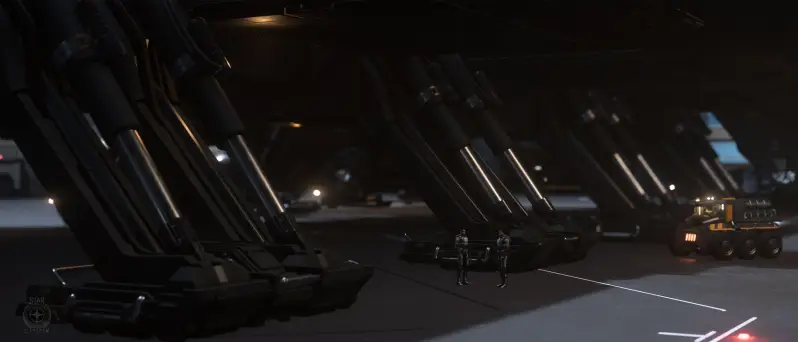
In the UK, the Ships team progressed with the Gatac Railen, preparing it for its greybox gate review at the end of March. As part of this, the team brought up some areas of the ship to later pipeline standards to help set the tone for larger Gatac-style spaces.The Greycat UTV wrapped up testing and is awaiting its release into the PU.
"We're hoping players will have as much fun with this little vehicle as we did making it!" Ships Team
The MISC Hull B had its combined LOD0 and final gate review. This was due to some teams coming onto aspects late, which would cause the earlier gate to technically not be passed. However, all other teams' work was done for the later stage.
The Drake Ironclad, Ironclad Assault, and Command Module all progressed through their LOD0 phases, with the team starting a full lighting and detail pass across all three to unify the visuals. Alongside this, the team returned to the Caterpillar to set it up for the Command Module.
Several devs moved back on to the RSI Galaxy after a small hiatus helping other projects out. Like other ships in pre-production, they went over the original layout and made adjustments, both for flow and to make use of the ever-growing asset library, all while keeping true to the role and intent of the ship. This involved adjusting the front half of the lower deck to be less isolated and prevent it from leading to a dead end. Other areas were also adjusted to current metrics using suitable assets from other RSI ships.
Five unannounced vehicles also progressed throughout March. The first successfully passed both its whitebox and greybox reviews and is on track for its LOD0 review shortly. The team has made great progress on this ship, as it has grown from an initially simple idea into something much more complex.
The second approached its LOD0 review, with the devs moving through the interior while other teams, such as UI, started work on the required updates. The third passed its greybox gate review and is approaching its LOD0 review at the start of April. The team made some minor adjustments to the cockpit to give the player a better view alongside more refined inputs on the control stick.
As mentioned in last month's report, the fourth ship had its greybox gate review following review and feedback implementation. Although this delayed the progress slightly, it will result in a much stronger end result.
The UK team's final unannounced ship progressed toward its whitebox review. This is turning out to be quite complex in terms of animations and states, but the end result will be worth it.
In North America, the team continued with the Drake Kraken. The capital ship successfully passed its whitebox gate review, which was a major milestone for what will be the largest player-flyable ship on release. The team then concentrated their efforts on the main hero rooms, such as engineering, core traversal routes through the ship, and implementing the new bespoke manned turrets and weapons.
Alongside final support for the release of the RSI Aurora Mk II, an unannounced vehicle continued through the greybox phase. Minor adjustments were made to the flow to aid traversal in the rear half of the ship and additional windows were added throughout.
Audio,
Last month, the Audio team successfully delivered their work for Alpha 4.7. This involved producing an engaging sound experience to support the visually stunning new dungeon experience."We're proud of our rock-cracking sound design and the more immersive ambient experiences we're now adding to each release. Of course, it must be said that the Music Design team are expanding the universe with the sweet notes from our composer, Pedro, who provides that extra layer of magic to the universe. Indeed, we are expanding the value of musical input and will be bringing more composed music within the game than previous years." Audio Team
The team also provided the new Claw Salamander enemies with a unique language, adding more threat and value to NPC conflict. Following this, they began designing further language packs for future builds.
Some of the Vehicle Audio devs visited Jared on Star Citizen Live to discuss the increasingly elevated vehicle experience that's been happening over the last year. As more new vehicles approach, the team are continuing to lift the soundscape and care they put into the flight experience.
Community,
The Community team kicked off March by publishing the February PU Monthly Report and laying the groundwork for an eventful month ahead. They also announced the winners of the Coramor Love Story and Red Festival Earned Fortune contests.
The team then supported Stella Fortuna with a helpful Catch-All thread and a video contest dedicated to those daring racers willing to tempt fate and chase fortune.
The Community team also supported the release of Alpha 4.7: Welcome to the Rock. They began by publishing a Patch Watch highlighting what players could look forward to and continued with a thread detailing the major features. They also published an Operation Breaker Stations FAQ to familiarize players with this new activity and a Crafting Guide on the first implementation of this game-changing new mechanic. With this release premiering the RSI Aurora Mk II, Community created an informative Q&A for this reimagining of a classic ship. The team also provided updates to the New Player Guide and Welcome Back, Pilot page, keeping both new and returning players informed of everything Alpha 4.7 introduced to the 'verse.
The Community team continued to plan and attend Bar Citizen events around the world, including publishing a comm-link for the LVL UP EXPO in Las Vegas. "We're looking forward to connecting with so many of you face-to-face in Vegas! Find us on the LVL UP EXPO show floor or meet up later at the Bar Citizen Afterparty. We hope to see you there!" Community Team
Between the Alpha 4.7 release and a full slate of community and official events, the team stayed closely connected with players and attendees, with community sentiment shared directly with developers.
Finally, the team continued their usual evergreen tasks, such as This Week in Star Citizen and bi-weekly updates to the Roadmap and Roundups, Monthly Reports like this one, and more.
Core Gameplay,
The Core Gameplay team spent part of March progressing hacking, with the devs polishing items, improving the tutorial, and ensuring the UI is always correctly aligned to the player.Various improvements were made to weapon handling, such as switching back to the previously held weapon after using a MedPen. And now, when equipping a new knife from the ground, the player character will store their currently held weapon or entity unless it can't be stored.
Significant work was done toward Crafting, which debuted in Alpha 4.7. March's tasks included implementing minimum quality requirements for blueprint aspects and the ability to dismantle items that weren't previously crafted. Various additions were implemented too, including the ability to define which blueprints are entitled to the player by default, a HUD notification when a player receives a blueprint, material and quality information to the tractor-beam display, and the ability to stack resource containers with the same quality. Players can now also view owned and unowned blueprints in the Crafting UI.
Paging support was given for the crafting machine instead of infinite scrolling for better performance, and new resource thumbnails were added to the crafting machine, freight elevator, and inventory. Resource and quality tracking for freight elevators and inventories was standardized too.
For Engineering, the devs added collapsing headers to the diagnostics MFD, specific warnings to the notifications panel, and color ranges for damaged components on the engineering screen.
Updates were made to the refueling mechanic. These involved various changes to the docking flow, such as allowing any ship to initiate the docking procedure. This means that the refueling ship (such as a Starfarer) can initiate docking and back up to dock with the ship that needs refueling. Auto-docking now triggers when the two ships are close enough. The ships also automatically undock whenever the refueling process is complete to smooth the overall flow.
Progress continued on Drake's Command Module, with the team integrating the Resource Network into the module's hand-off procedure, making sure that the host and parasite ship properly connect to the same network. Functionality was also implemented to ensure that the shield faces correctly update when the Command Module is docked and undocked.
The Transport system is now largely feature complete and going through iteration with the Design teams for workflow improvements and additional changes to robustness and scalability. March's tasks involved improving various debug tooling for easier bug identification by the developers and QA team. The setup for Area18 was completed, which will be used for the initial Tech Preview tests alongside other locations. The team also addressed major issues that caused doors to open into the void and laid the foundation for self-repair functionality. For example, if carriages get into a bad state, the transport system can fully reset the network as needed.
Toward the mission system, the team fixed various issues causing rewards to not be correctly attributed or progress for event trackers to be incorrectly calculated. Progress began on implementing Mission v2 functionality into Starchitect, including the ability to dynamically create mission locations without designer intervention, greatly improving the speed of development.
The inventory rework continued too, with the team finalizing the remaining elements and fixing as many bugs as possible, both from what was found internally and feedback from the PTU.
"Ship hangar servicing" had its first playable gate, which was met favorably. The team is now working on preparing it for the content teams.
Finally for Core Gameplay, the team is preparing to move onto social features.
Creature Content,
March saw the formation of a new team, Creature Content, to focus on the ongoing development of 'Star Paws' features. Alongside focusing on improvements to the technical pipeline, the team progressed with a number of new creatures.
Alpha 4.7 introduced some early results of these technical pipeline upgrades, with variants of the valakkar that have grown accustomed to their icy environment.
In March, additional design work went toward upcoming creatures while looking ahead to plan in additional improvements for existing creatures, including mesh and behavior updates and additional variants.
Economy,
March saw the Economy team moving onto features for Alpha 4.8, which will bring new item crafting, commodity trading, and item recovery systems to the 'verse."It is important to note that the current Alpha 4.7 crafting implementation is transitional. For example, we are being generous with high-end savrilium ore to pull players into the mining and fabrication pipeline. Our goal is to move away from a 'credits-only' mindset and toward alternate progression systems, such as crafting, reputation, and more." Economy Team
Operation Breaker Stations serves as a key example of this transition. While it currently offers a high UEC profit margin to encourage players to engage with the new crafting materials, its true purpose is to function as a resource hub. By paying a buy-in, players trade currency for the convenience of guaranteed high-value material gathering. This allows them to quickly secure the requirements for high-end personal armor and FPS-weapon production.
As the economy stabilizes, shop pricing for crafted goods will begin to reflect the quality of the materials used. Consequently, the team will keep a close eye on all the mission buy-ins and resource yields to move away from a profitable NPC sell loop and toward a gear and player-centric economic model. In the final state, these locations will be the go-to spots for high-end crafters to convert credits into the exact materials they need, prioritizing material acquisition and quality over raw UEC profit.
Game Intelligence Development,
In March 2026, the Game Intelligence Development team primarily focused on the ongoing design and planning work for Mission System v2. They spent the first half of the month collaborating with Mission Designers to refine how the new system would work in practice and how to best expose the scripting tools to the designers. They also iterated on a UI prototype for the mission interface and made several refinements.Game Intelligence Development also began work on a new tool to facilitate the development of the new mission system. Throughout the month, they continued deeper investigation and design work around its implementation, refining the architecture based on stakeholder feedback. This work will serve as a foundation whenever the team returns to the system.
Level Design (UK & DE),
While March saw the Level Design teams progressing on a variety of locations, the primary focus was on Nyx's social stations and QV Breaker Station locations, which went live in Alpha 4.7.Elsewhere, the team worked toward multiple future deliverables, including Tactical Strike Groups and the Siege of Orison rework. They also began to prepare for a major new location.
Finally, the devs fixed some legacy bugs in Stanton and Pyro while also supporting new technical initiatives, including helping set up the level requirements for the transport refactor and working toward future content for Starchitect.
Mission Design,
Mission Design completed the second Nyx mission pack, which expands the amount of content for players, including moving some factions to utilize a reputation scope.The team also brought back the courier system, which currently exists in Stanton and Pyro, along with adding delivery contracts to bridge the gap between hauling and courier missions. This included modifying rooftop deliveries in New Babbage and ArcCorp to allow players to drop off 1-SCU boxes. Mission support was also added to the new QV Breaker Stations.
Tactical Strike Groups continued to be polished alongside refueling and defend-location missions.
With the recent changes to ship armor, the team kicked off a major rebalancing of ship-based mission combat alongside a design idea to give players information upfront on what ships they might encounter so they can choose an appropriate loadout.
Finally, the team are approaching the first playable state of the new Battaglia missions, which include modular mission parts that can be used as standalone missions for other factions.
Narrative,
In March, the Narrative team continued tasks for a whole host of upcoming gameplay operations and missions. Alongside refining the narrative of Tactical Strike Groups, they crafted storylines for several new engaging missions that will be released alongside upcoming patches; one of which will see the return of an old foe.The team also prepared for their next capture session in April, which will see the story mission script mentioned in last month's report being recorded. This script went through revisions and refinement thanks to placeholder testing to help identify potential issues before the final session.
The Narrative team also began planning an eventual overhaul of the current item descriptions to accommodate new changes that are coming with future revisions of the inventory and fabrication systems.
Finally, Narrative continued to work with the Starchitect team to develop how the mission system will evolve once the tool comes online to add more locations to planet surfaces.
Online Technology,
In March 2026, the Network team focused heavily on advancing the foundation for Server Meshing. A central part of this work involved Quasi-Dynamic Server Meshing (QDSM), which intelligently distributes areas of the game world across dedicated servers based on their current load. The team completed a second round of testing for the initial version, resolving a bug where multiple game zones were incorrectly assigned to the same server. They also made the system more efficient by removing a global performance bottleneck that was causing thread contention.On the stability side, several crashes and thread-safety issues in the server management system were resolved, including a crash that could occur when a game server disconnected at the wrong moment. The team also made solid progress on the next generation of the Territory Manager, which is responsible for dividing the game universe into distinct regions to be handled by separate servers. Multiple improvements were submitted for review throughout the month.
Finally, the team continued ongoing bug fixes and maintenance work and progressed with a technical design document for a new versioning and patching system. This will play an important role in how future game updates are delivered to players.
For the Live Tools team, the Bootstrap user interview phase is wrapping up, with the devs acting on findings to improve its reliability and day-to-day usability. Infrastructure cleanup and configuration improvements also began.
Panic Switch, the error-reporting tool, received several bug fixes and improved documentation for advanced users. Work is ongoing to improve crash handling robustness, including better resilience when errors occur and smarter automatic handling of known recurring crash patterns.
Hex, the game dashboard, continued its 4.0 modernization, with multiple new pages and features ready to ship or in active development. The Blueprint Viewer was delivered, while work on the new account detail page and tool integrations is progressing well.
The Online Services team spent time in March supporting and improving the Mission System, which powers in-game content like hauling and industrial missions alongside instanced content. A key bug was identified and fixed where objectives were completed but the mission itself wasn't always registering as finished.
Alongside the bug fix, the team made significant progress on a longer-term solution: moving mission completion logic (the and/or rules that determine when a multi-step mission is truly done) into the backend service, making it more reliable and futureproof. The mission system was also expanded to support entity-owned missions, meaning non-player objects can act as mission owners, which opens the door for new types of instanced content.
Online Services continued to advance the item-imprint feature, which is the underlying system that will allow players to truly 'own' the items in their ships and on their characters. Additional groundwork is also underway to ensure the system queries item ownership in a more robust and efficient way.
The team also worked on lazy inventory creation, a behind-the-scenes improvement that makes the game smarter about when and how it creates inventory records. Finally, technical design was done for regional chats.
R&D,
In March, the ongoing ground-fog work continued. A test build was handed over to Tech Art for prototyping and to gather feedback. Time was also spent improving tooling. The ability to gather thread names was added to the dump log tool when extracting call stacks for crashes submitted via the PU. The shader compiler server that services the build pipeline was substantially refactored - a proper thread pool implementation was added, while load balancing was significantly improved when using remote compile slaves.DXC/Clang-based compiler output is now properly parsed for the generation of error reports. A 'least recently used' (LRU) scheme was added to automatically evict outdated shaders in memory and on disk. Also, support for processing limits was added to terminate compile jobs exceeding the specified runtime and memory thresholds. All these should help improve server stability, which often run for months on end, as well as reduce their resource usage.
Tech Art/Animation,
Over the past month, the Technical Animation team progressed with characters, creatures, interactables, cloth simulation, and the pipeline tools that support all of the above.On the character side, head exports for two new named PU characters progressed through the DNA/RigLogic pipeline. Gate-five polish passes were done for two additional faces approaching their final quality bar too.
The devs reduced per-character RigLogic memory overheads, which directly improve NPC density and performance in populated locations, and resolved a critical DNA compilation blocker that would otherwise have stalled all head-related work in the Star Citizen patch branch.
On armor and weapons, the Super Heavy Combat Armor animation set is being brought from SQ42 across to the Persistent Universe player character, and binocular ADS and zoom-state transitions were finalized.
For interactables, the team is implementing the flaming-torch held animation, tightening the player interaction cone so usable objects feel precise and correctly aligned. They're also completing food prop tech animation for Nyx-location content.
StarCloth, CIG's physics-based cloth simulation system, saw substantial improvements, including driver mesh validation, engine API alignment, a new bind offset parameter, and simulation pruning optimizations. The result is more performant and physically believable clothing on PU characters.
Ongoing pipeline work includes a male-to-female retargeting fix, a character tool featherblend bug fix, Maya 2026 plugin support, and an in-development dialogue events cleanup tool for NPC ambient conversation data.
VFX,
For Alpha 4.7, VFX focused on finishing Nyx's QV Breaker Station locations, such as the laser room and spacescaping, and hero moments, like the laser and asteroid interior.Finally, the Greycat UTV and MISC Hull B received VFX pass and bug fixing.
-
Star Citizen Crafting Guide (2026 Update)
Introduction
Crafting in Star Citizen is becoming a core part of the game’s long-term economy and progression system. It allows players to gather raw resources, refine them, and create valuable equipment such as weapons, ship components, and gear.
Whether you play solo or as part of an organization, understanding the crafting system will give you a major advantage in both profit and self-sustainability.
How Crafting Works in Star Citizen
The crafting system is built around a multi-step gameplay loop that connects several professions into one complete pipeline.
Core Crafting Loop
- Resource Gathering
- Mining (FPS and ship mining)
- Salvaging wrecks and ships
- Transport
- Moving raw materials safely to refineries or storage
- Refining
- Processing raw ore into usable materials
- Crafting
- Creating weapons, ship components, and equipment
- Usage or Trade
- Equip items or sell them on the market
Raw resources must be refined before they can be used.
Key points:
- Different refining methods affect output quality
- Time vs efficiency trade-offs
- Higher quality materials = better crafted items
Refining introduces strategic decision-making into the crafting process.
Crafting will allow players to create:
- Weapons
- Ship components
- Armor and gear
- Industrial equipment
Quality Tiers
Items will likely follow a tier system:
- T0 / Basic – Standard performance
- T1 / Improved – Better stats and durability
- T2 / Advanced – High-end performance
Material quality and crafting skill will directly influence results.
Solo vs Organization Crafting
Solo Players
- Limited scale
- Focus on small production and profit
- Easier logistics
Organizations
- Full production chains
- Large-scale manufacturing
- Control over supply and economy
Organizations will dominate high-end crafting due to resource control and coordination.
Advanced Tips
- Focus on high-demand materials for maximum profit
- Combine mining + refining + crafting for full efficiency
- Work with others to reduce risk during transport
- Track updates — crafting systems are evolving rapidly
-
Current State of Crafting (2026)
Crafting in Star Citizen is still under active development.
- Early implementations (T0 / T1 systems)
- More complex crafting mechanics planned
- Integration with the dynamic economy is ongoing
Future updates are expected to significantly expand crafting depth and player impact.
Final Thoughts
Crafting will become one of the most important gameplay systems in Star Citizen.
Players who learn it early will gain:
- Economic advantage
- Independence from markets
- Strategic power within organizations
Keywords
Star Citizen crafting, Star Citizen economy, Star Citizen guide, crafting system Star Citizen, Star Citizen gameplay 2026
The Weekly Community Content Schedule
Monday:
➣ This Week In Star Citizen
Tuesday:
➣ March Monthly Bundle
Wednesday:
➣ Roadmap Update
➣ Roadmap Roundup
Thursday:
➣ Stella Fortuna 2956 commences!
➣ Patch Watch Post: Alpha 4.7
➣ Star Citizen Live - FPS Gameplay and Combat Q&A
Friday:
➣ RSI Weekly Newsletter
View our latest work
Star Citizen Alpha Patch 4.6 LIVE
Alpha Patch 4.6 has now been released onto the LIVE Environment! Launcher should now show: VERSION 4.6.0-LIVE.11135423.
Build Info
Characters in this new environment have been built from Long Term Persistence(LTP) data.
Currently with LTP, certain player states such as personal hangar layout, unstowed in-game purchased ships, custom characters, in-progress refinery jobs, and in-game purchased consumables are not saved between releases which will cause some items to be lost in the update.
- Long Term Persistence: Enabled
- Starting aUEC: 20,000
This Spectrum post is an abridged version of the notes. For the full in-depth details, please visit the main notes at the link below!
Star Citizen Alpha 4.6 LIVE Release Notes
Features and Gameplay
Gameplay
► Clearing The Air: Alliance Aid Missions
► Kel-To Ship Supply Kiosks
► Re-enabled place from inventory
► Additional new salvage debris
► Star Map planetary harvestable information
Ships & Vehicles
► LAMP: Light Amplification System
► Engineering and Ship Armor Gameplay Updates
► Aurora Series Update
► Ground Vehicle Missile Changes
Core Tech & Audio
► Virtual Reality Updates (Experimental)
► Vehicle and Item Density manager updates
► Texture Streaming Performance Polish
Bug Fixes and Technical Updates
Star Citizen Alpha 4.6 contains over 160 bug and crash fixes since 4.5. 56 of which originated from the issue council.
- Client Crash Fixes: 23 fixes
- Server Crash Fixes: 2 fixes
- HDR OpenXR-Vulkan Crash Fix
- NVidia Smooth Motion Black Screen Fix
🛠️ Common Questions: Everything You Need to Know Before Joining
If you’re on the fence about starting your journey in the Verse, you’re not alone. Here are the most common questions from new recruits in March 2026.
Q: Is Star Citizen still in Alpha?
A: Yes, but it is a "playable Alpha." This means you can download the game today and access hundreds of hours of content, including space combat, mining, salvage, trading, and FPS missions. Version Alpha 4.6 is the most stable and feature-rich build to date, with Alpha 4.7 already in testing.
Q: Do I need to spend thousands of dollars on ships?
A: Absolutely not. You only need a single Starter Pack (starting at $45) to play the game forever. Every ship you see in the game can be earned purely by playing and earning in-game currency (aUEC). The luxury ships you see in sales are for those who want to support development further.
Q: What happens if my ship is destroyed?
A: Every ship in a Starter Pack comes with Insurance. If your ship is destroyed or stolen, you can simply "claim" it at any terminal, and it will be replaced after a short waiting period. Your investment is always protected.
Q: Is the game "Pay-to-Win"?
A: No. While someone can buy a larger ship, they cannot buy the skill to fly it. Large ships require a full crew of players to be effective. A single skilled pilot in a small, agile fighter can easily take down a much larger, poorly managed vessel. Additionally, the best equipment and components are now tied to the Crafting and Reputation systems.
Q: Can my PC run Star Citizen?
A: Star Citizen is a high-end simulation. To ensure a smooth experience in 2026, we recommend at least 32GB of RAM, a modern 8-core CPU, and an SSD (the game will not run on a traditional HDD). You can check your hardware compatibility on the official Telemetry Page.
Q: What is the difference between Star Citizen and Squadron 42?
A: Star Citizen is the Massive Multiplayer Online (MMO) universe where you play with thousands of others. Squadron 42 is the cinematic, single-player story campaign. Both share the same flight mechanics and universe, but SQ42 is a scripted narrative experience coming later in 2026.
Q: Why should I use a Referral Code?
A: Using a code (like the one below) grants you 50,000 extra UEC (in-game credits) to buy armor, weapons, or ship components immediately. Without a code, you start with significantly less.
Optimizing your computer for this game,
the best tips on the NEW CITIZEN GUIDE

Demystifying the 'Verse: Clarity in complexity
Understanding the complexities of Star Citizen's development is key. Our reports offer development transparency, tracking core technologies like Server Meshing and Gen12 Renderer. We highlight specific updates on Squadron 42's journey to feature-complete, from cinematic polish to AI behaviours. Get direct updates on the ship pipeline, new planetary tech, and why these updates matter for your gameplay. Save hours, gain insight.
Unmatched ambition, tangible progress
Feel the confidence that your investment is in good hands. Our summaries showcase the consistent breakthroughs in technology and content, proving Star Citizen and Squadron 42 are more than games – they're the next generation of digital excellence. Every monthly update is a step closer to a living, breathing universe. Witness the creation of the most ambitious project in gaming history and feel the excitement of what's to come.
Your roadmap to an expanding universe
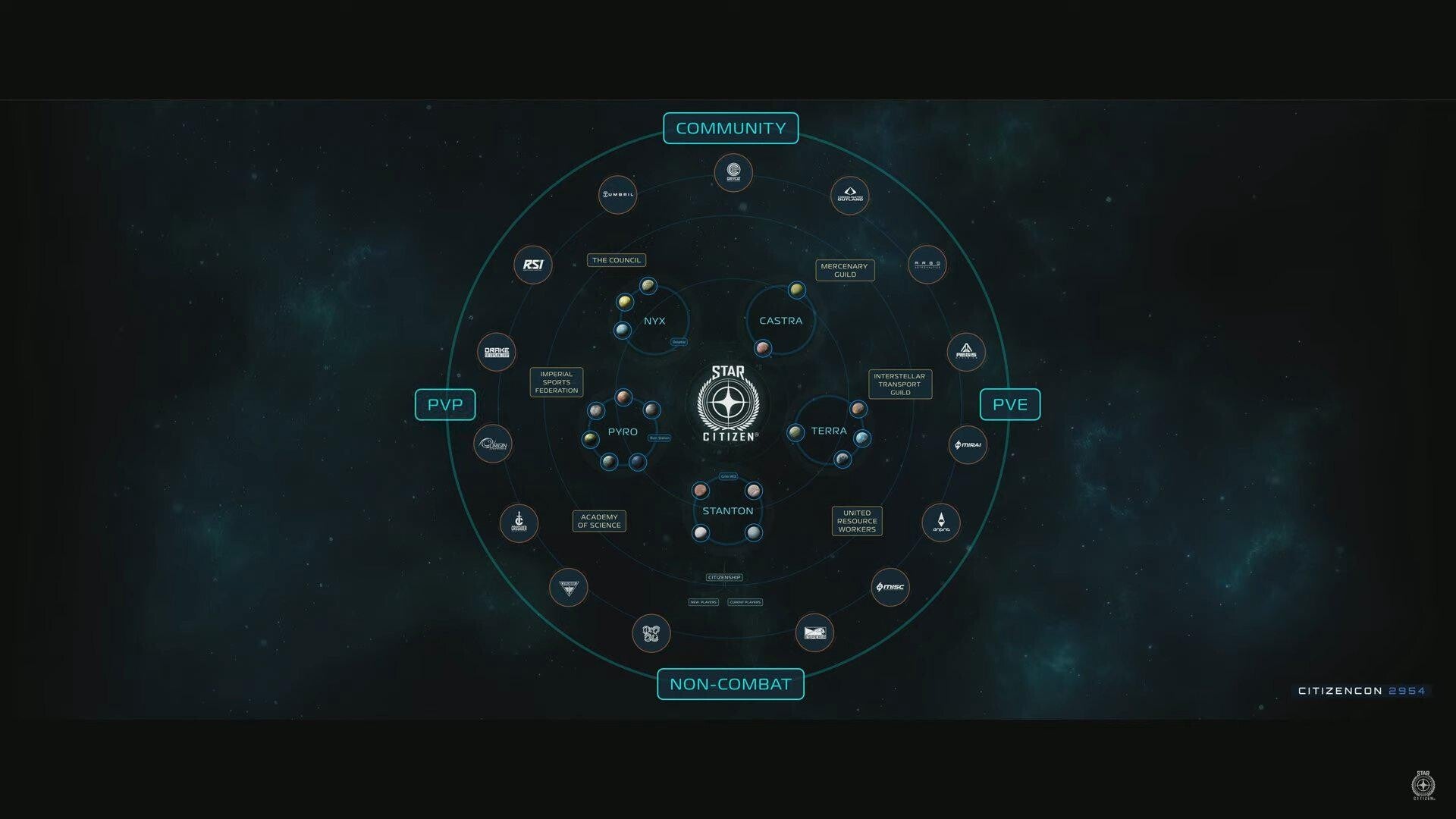
New to Star Citizen? Our summaries demystify technical jargon, translating concepts like 'Server Meshing' into clear gameplay benefits. We provide a roadmap of month-to-month momentum, showing that the game is a living, evolving entity, not a stagnant project. We focus on the 'cool factor'—new locations like Pyro, upcoming ship interiors, and core tech like Persistent Entity Streaming (PES)—to spark your imagination. See how the game remembers where you left your coffee cup, creating a truly immersive experience. By understanding the value of these upcoming features, you’ll see why now is the best time to join the 'Verse with our referral code STAR-NVGH-HR6X for bonus credits.
📈 SEO & Growth Strategy (Internal Notes)
-
Keywords: Star Citizen Alpha 4.7 Guide, How to Craft in Star Citizen 2026, Nyx System Locations, Squadron 42 Release Status.
-
Engagement: "Join the 2956 Stella Fortuna event now and win a Hull B cargo hauler!"
-
Visuals: Replace old screenshots with high-res captures of the Ice Valakkar and the new RSI Aurora Mk II gold standard interior.